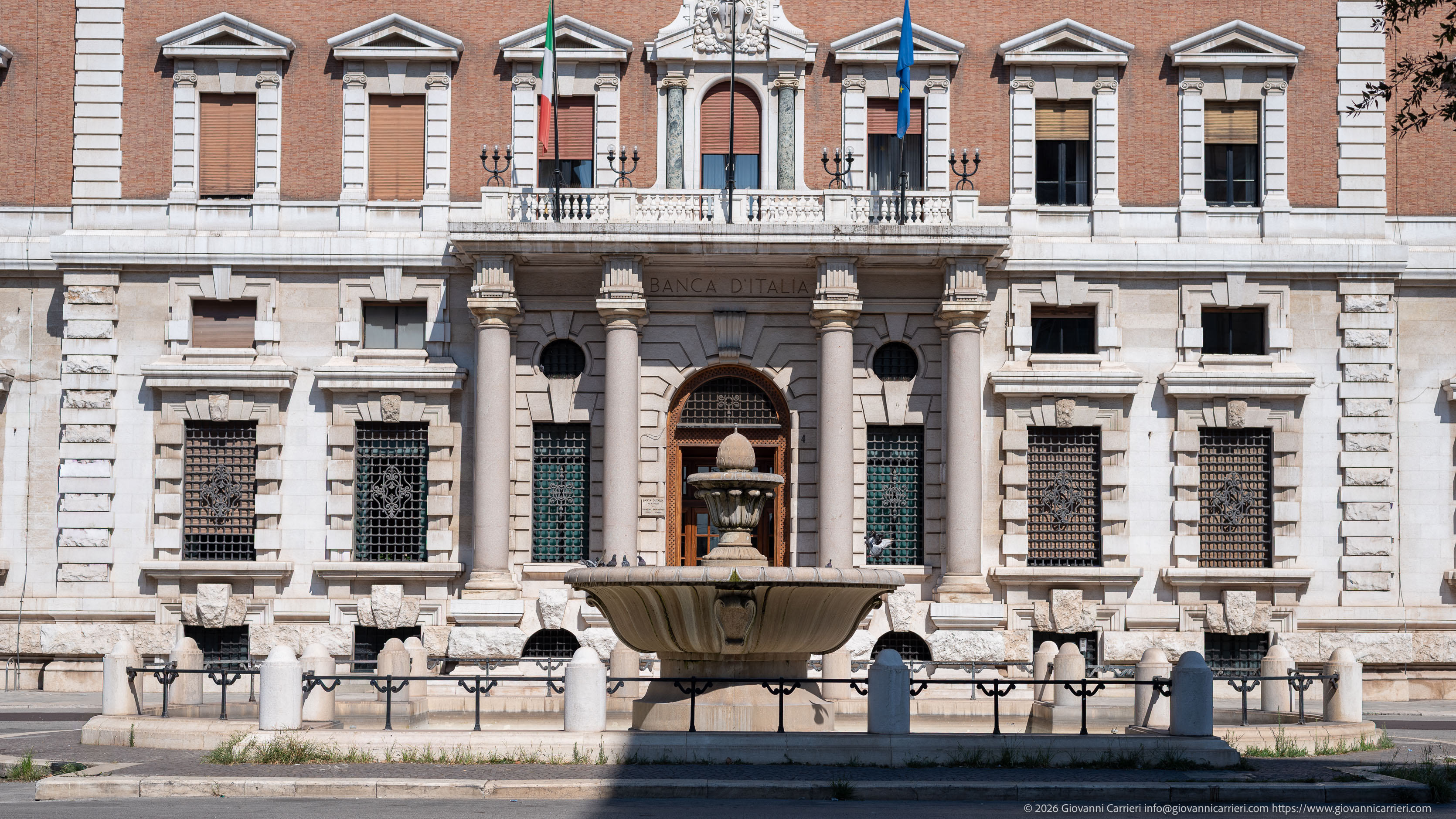
The facade of the Bank of Italy building on Corso Cavour in Bari with its monumental stone fountain
The Bank of Italy building stands at Corso Cavour 4, at the entrance to Bari's Umbertine district, along the stretch between the Chamber of Commerce and the Teatro Petruzzelli. The site was occupied by the sheds of the so-called Iron Market when, in 1926, work began to a design by the engineer Biagio Accolti Gil; construction lasted six years and the building was presented to the city in October 1932, taking in the offices previously housed in via Cairoli. It rises over four levels plus a basement and deliberately adopts a Renaissance and Mannerist language instead of the Fascist-era style then prevailing: rusticated work and white stone define the lower band, while red brick cladding characterises the upper part, articulated by Doric and Ionic orders. The monumental entrance, preceded by a flight of steps, is framed by four columns supporting the ceremonial balcony from which the Italian and European flags fly. The large stone fountain seen in the foreground was built together with the palace and later transferred to the Municipality of Bari; it is still part of the city's ornamental fountain maintenance programme. Building and basin together have become one of the most recognisable images of twentieth-century middle-class Bari.