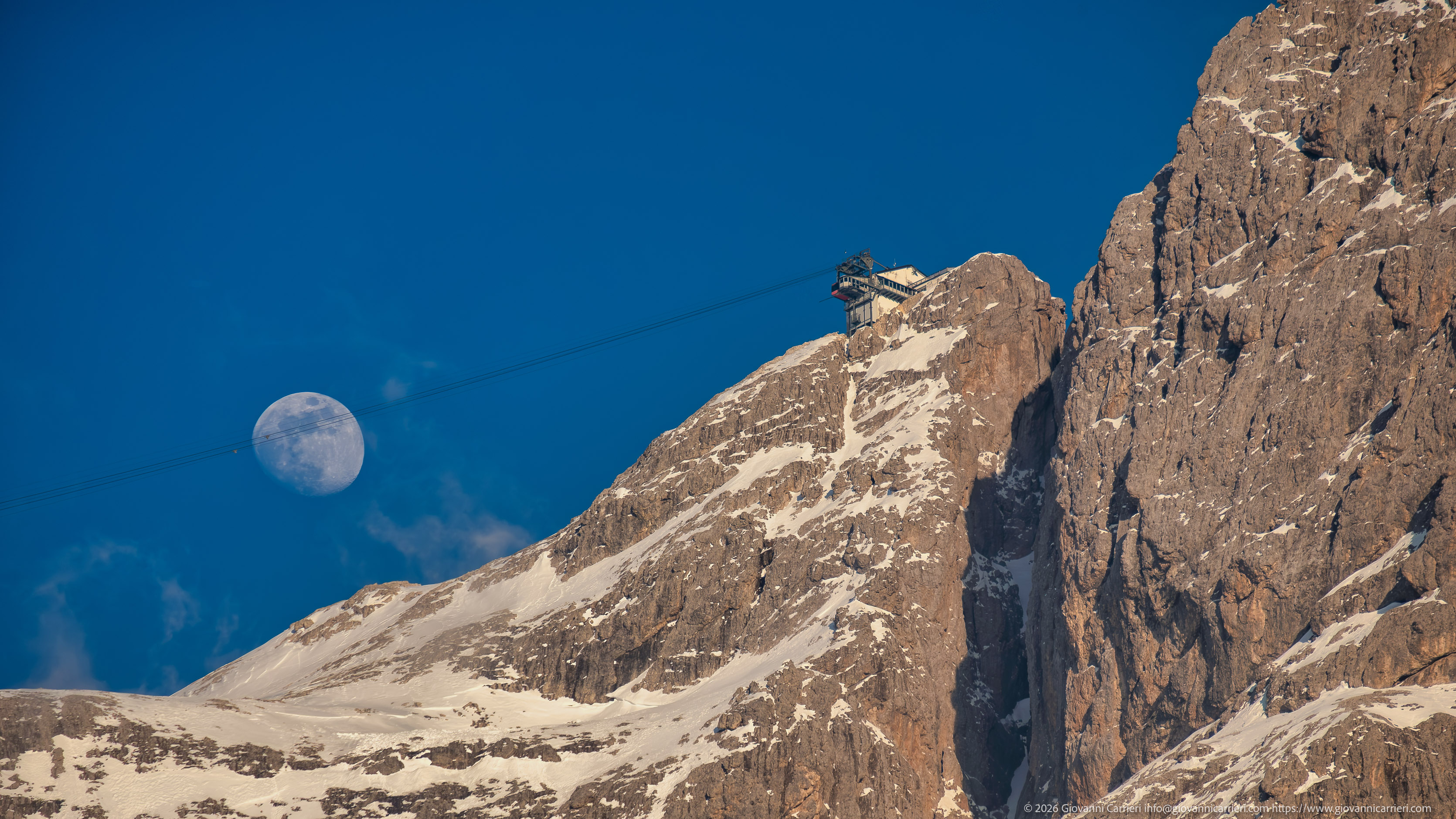
The upper station of the Rosetta cable car on the ridge of the Pala group, with the moon low to the west
Taken with a telephoto lens from the valley floor, the frame isolates a portion of the Pala di San Martino ridge in horizontal format. At the centre of the composition the building of the lift's upper station rests against the rock edge; the carrying cables cross the field diagonally towards the left, where the lunar disc occupies the lower quadrant of the sky. The crop excludes any reference to the valley below and returns only the summit band. The structure marks the point where the cable car system rising from San Martino di Castrozza reaches the edge of the Rosetta plateau, beyond the wall. The ridge it stands on separates the slope facing the village from the rocky tableland behind: it is the threshold between the vertical mountain and the summit surface, and its occupation by a built structure makes legible the way this altitude was made accessible. The rock shows the sub-horizontal bedding typical of the group's carbonate platforms, cut by gullies that hold snow. Raking light strikes the rock from the right and picks out the exposed faces while the gullies stay in shadow: the sun is low on the horizon. The sky, deep and free of haze in its upper part, makes the moon visible in broad daylight; some low cloud gathers at the bottom left. Snow, patchy in the hollows but absent from the steeper surfaces, indicates a phase of partial cover.