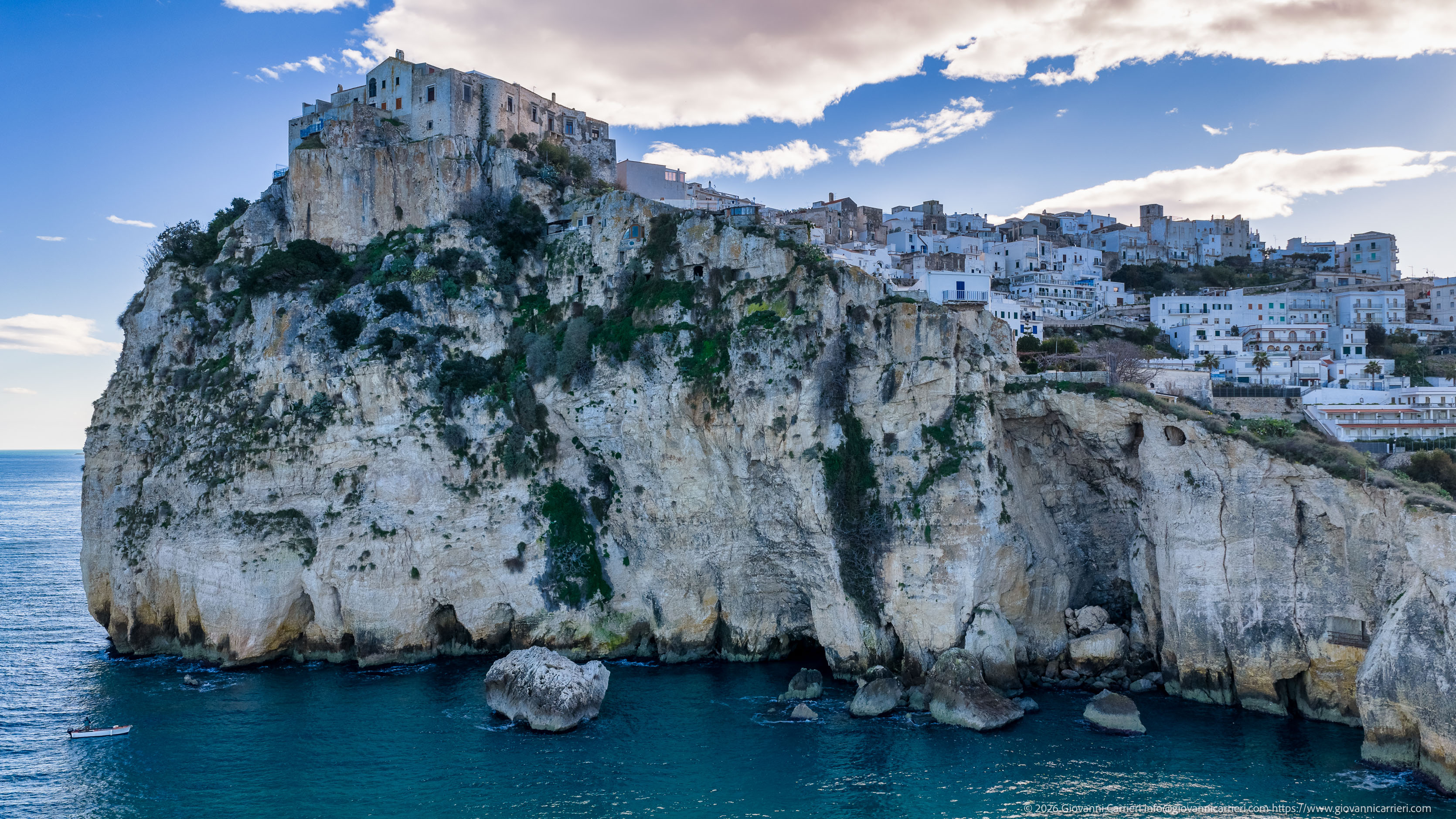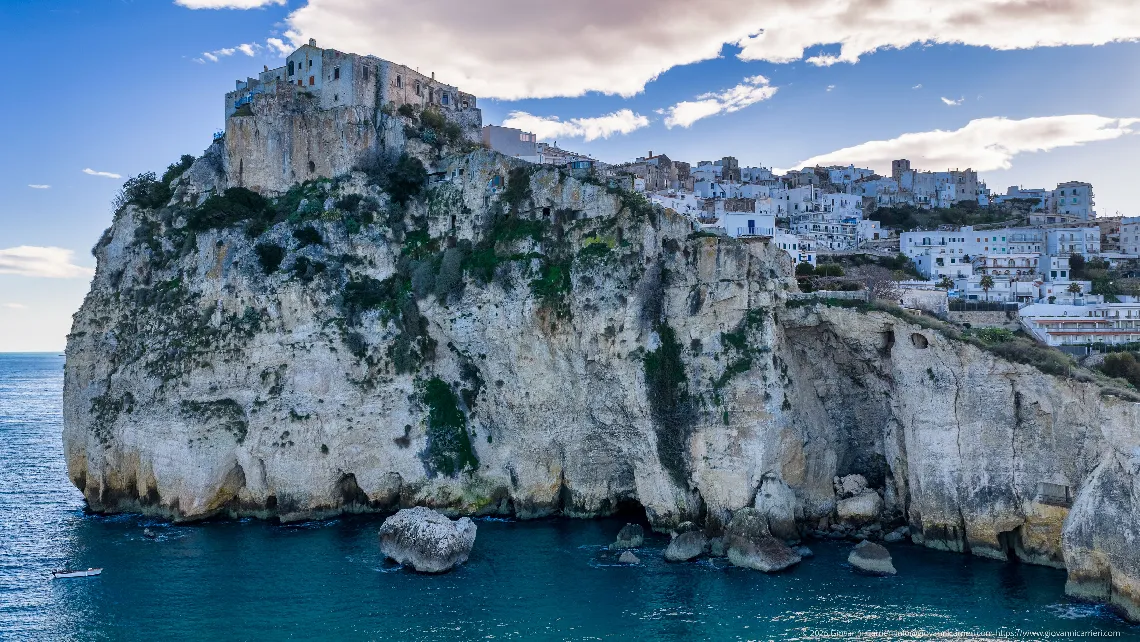
The cliff of Peschici featuring the Castle and the urban core overlooking the Adriatic Sea
The coastal profile of Peschici develops on a limestone cliff that hosts the castle and the initial residential core, historically named "pesclizo," at its summit. The fortress was built during the Norman period, between the 10th and 11th centuries, for defensive purposes against Saracen raids along the Gargano coast. The structure initially housed monks from the Tremiti abbey and underwent transformations under Frederick II with the construction of the tower known as Rocca Imperiale. During the Spanish viceregal era, the fortification was integrated with the Baronial enclosure to increase protection against Turkish threats. In 1735, the restoration by Emanuele Pinto, Prince of Ischitella, led to structural changes in the upper floors and reception areas. The geological section of the cliff reveals rocky layers eroded by the sea, above which the town is organized in a continuity between military architecture and civil settlement.
Peschici, Peschici cliff, Peschici Castle, Gargano, Puglia, Adriatic coast, Norman fortification, Rocca Imperiale, Baronial enclosure, coastal architecture
 Attestato di proprietà